
Epoxy Flake Garage Floor with Polyaspartic Finish
Serving Central Florida
9 photos · 1 video · Completed
Advanced Surface Systems · Orlando, FL
Polyaspartic is a coating chemistry from the polyurea family, and it is one of the systems we install on garage floors and other concrete that needs a high-performance finish. We also install epoxy, so the question we start with is what your slab and your routine call for.
Polyaspartic systems from $5/sq ft.
Call for a project estimate

Finished Work
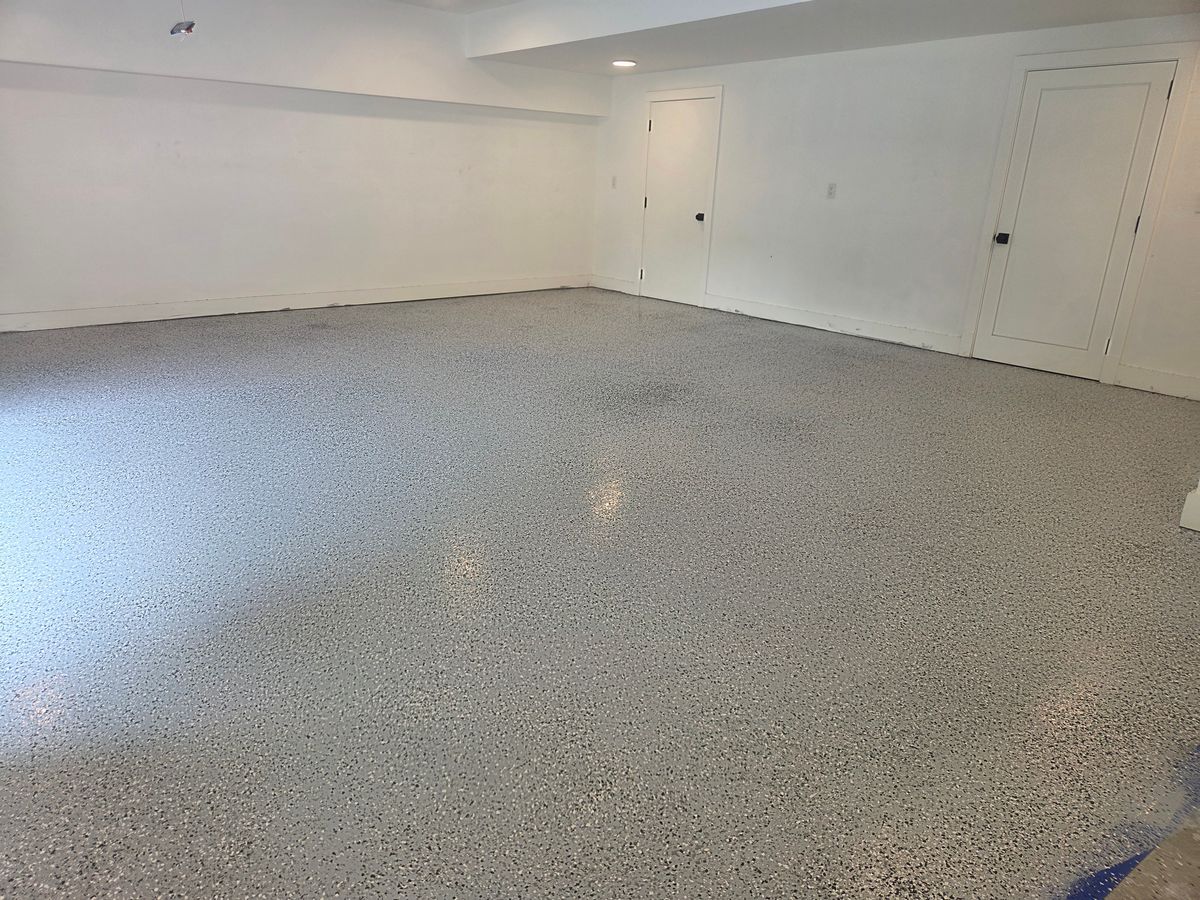
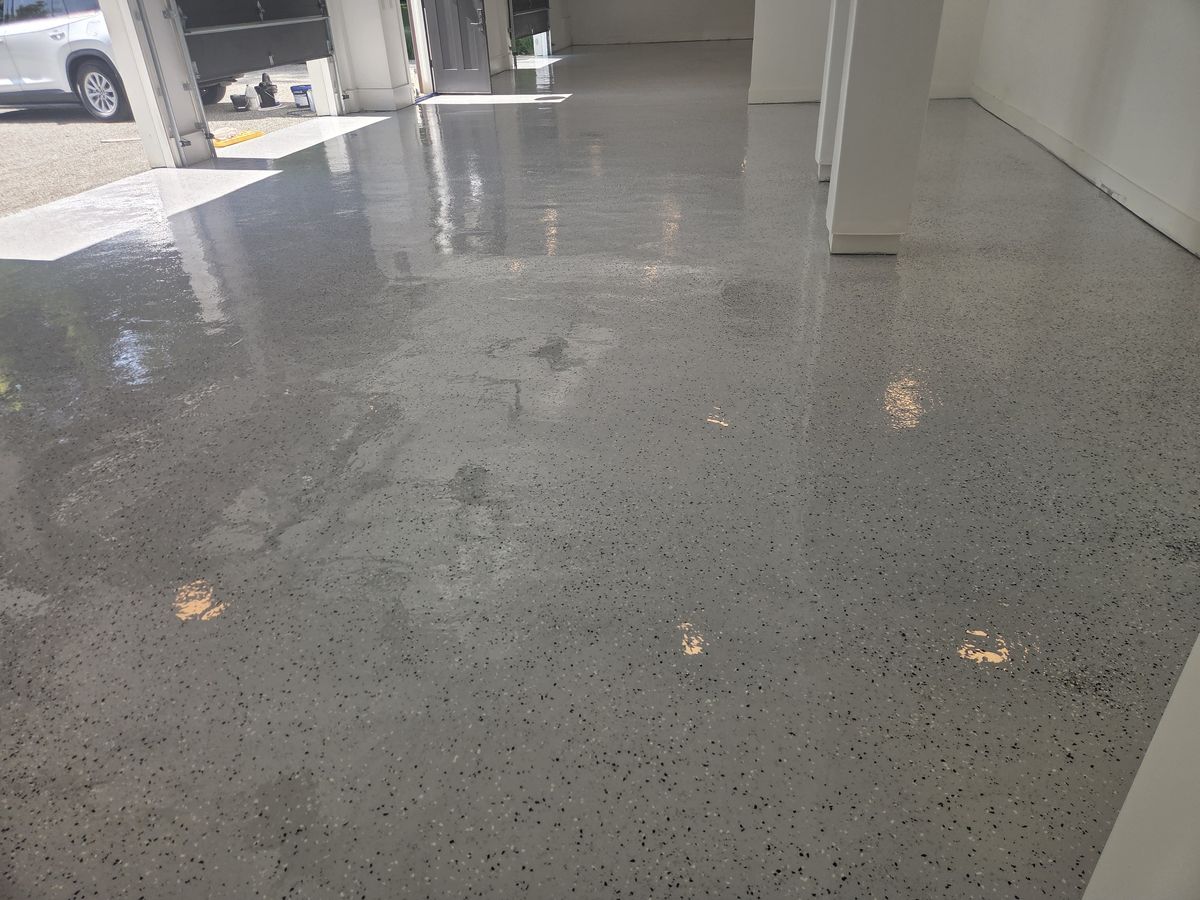
One project, finished with a polyaspartic top coat. Swipe or use the arrows; select a photo to enlarge it.
Serving Central Florida
9 photos · 1 video · Completed
Most requests start in the garage: a floor that takes cars coming and going, tools and projects. Polyaspartic also goes onto other concrete surfaces where the finish has to perform, and we choose it — or not — around the condition of the slab and what the project requires.
It sits in our Essential tier with solid color and full flake, at the same per-square-foot range. Choosing it is a matter of fit, not of paying for a premium label.
Every flake, full flake, solid color and quartz floor we install is finished with a polyaspartic top coat, over an epoxy base where the build needs one. Metallic is the one exception.
One-Day Installation
*Project timelines may vary depending on the coating system, project size, slab condition, repairs, moisture conditions and required surface preparation.
*Most areas up to about 500–600 sq ft are installed in one day; metallic systems take about 3 days.
Wrapping up the install and being ready for use aren't the same thing; the FAQ below has the figures.
A different chemistry doesn't mean a shortcut underneath. The concrete gets exactly the same mechanical groundwork whichever resin you go with — our nine steps spell it out.
Much of what you read online argues for one system over the other. Since we put down both, our advice comes from your floor: how the slab looks, how the space is used and the finish you want.
Chemistry note: polyaspartic is an aliphatic member of the polyurea family. That's the vocabulary; the decision comes down to the four questions listed.
You'll find plenty of strength multipliers, lifespan figures and sun-resistance promises attached to polyaspartic online. We don't publish figures like that. What we can tell you plainly: which layer of your floor it is, what goes beneath it, which tier it's priced in and when you can walk and park on the finished surface.
Project Progress
During (surface preparation) and completed photos of the same floor. Project page.
Serving Central Florida
12 photos · 1 video · During · Completed
Some estimates list it as the entire floor; others as the clear finishing layer over chips. Neither wording reveals thickness, preparation or what sits underneath. Three things worth asking of any contractor's paperwork, ours included: what lies beneath it, how the concrete gets readied, and whether the figure covers every layer.
Polyaspartic is part of our Essential tier: $5–7/sq ft. Project minimum: $900. Slab condition, repairs and moisture can move the number.
Yes. Garages are the most common place we're asked to use it, plus other concrete surfaces that need a high-performance finish.
Polyaspartic is part of the polyurea family of coatings. We install polyaspartic; we don't offer a standalone polyurea system.
Yes. We install both, so we recommend the one that fits your slab and how you use the space rather than the only product we carry.
On flake, full flake, solid color and quartz floors, yes — the final layer is polyaspartic, usually over an epoxy base. Metallic floors are finished with a different product.
Light foot traffic after 72 hours, vehicles after 5 days, full cure in 7 days. More on the garage page.
Call and walk us through the space and how you use it. We'll tell you whether polyaspartic or epoxy is the better match, and what it will cost.
Open daily, 6 AM – 9 PM